
Connecting HubSpot and B2B Marketing to Improve Lead Management and Nurturing

Executive Summary
A B2B healthcare service provider needed a more structured way to capture leads, understand prospect interest and maintain communication throughout a longer buying journey.
Xenia Consulting connected HubSpot CRM with website lead capture, content, email marketing and targeted outreach. The engagement combined lead scoring and automated nurturing to help the team respond to different levels of prospect engagement.
The resulting framework provided centralized lead management, greater visibility into prospect activity and regular email communication, generally once every three weeks.
About the Client
The client is a specialized healthcare service provider selling to organizational buyers. Its prospects require education, evaluation and internal discussion before committing to a sales conversation or adopting a program.
The business needed a marketing process that could build trust and maintain engagement throughout this decision-making period.
The Challenge
The client’s marketing activities needed to work together more effectively. The main challenges were:
Disconnected channels: Website, email, content and prospecting needed a shared lead-management process.
Limited engagement visibility: The team needed a clearer understanding of prospect interests and actions.
Inconsistent follow-up: Interested contacts needed ongoing communication when they were not yet ready for a meeting.
Different levels of readiness: Prospects needed messages appropriate to their engagement and buying stage.
Our Solution: A Connected HubSpot Lead Management and Nurturing System
Xenia brought lead capture, segmentation, scoring and follow-up into a coordinated framework centered on HubSpot.
HubSpot CRM and Website Lead Capture
We structured contact and lifecycle management in HubSpot and connected website and campaign conversion points with the CRM. Enquiries, resource downloads and meeting requests became part of an organized prospect journey.
Contacts were segmented by lifecycle stage, interests and engagement, helping the team deliver more relevant communication.
Lead Scoring Based on Prospect Activity
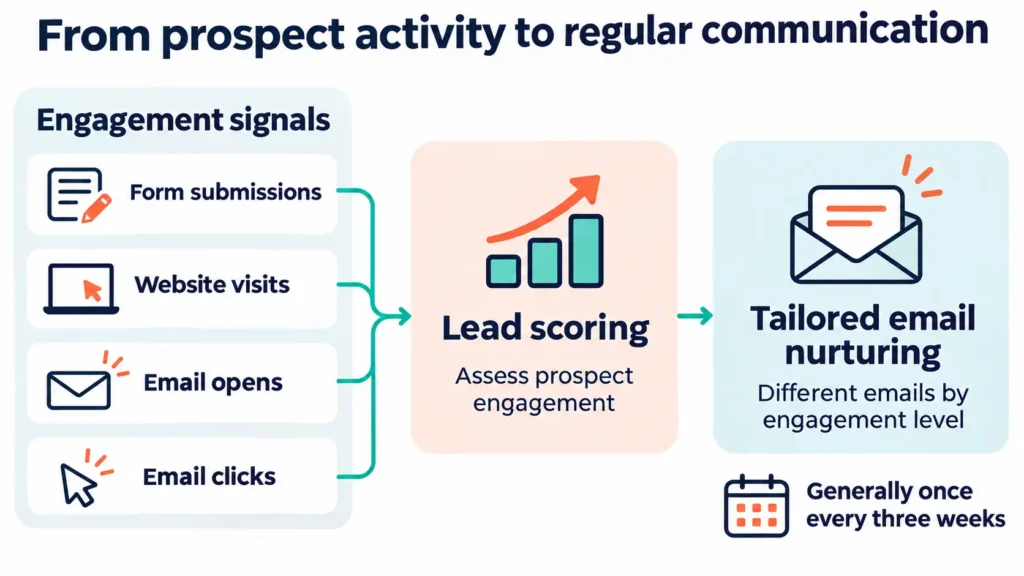
We implemented a lead-scoring mechanism that assigned scores based on form submissions, website visits and actions taken on emails, including opens and clicks.
This gave the team a structured way to assess engagement and helped determine the level of nurturing communication each prospect received.
Scoring connected individual interactions with the wider prospect journey. Rather than treating every contact in the same way, the team could use recorded activity to guide communication. A prospect exploring educational resources could receive further information, while a more engaged contact could receive messages encouraging a meeting or presentation.
Automated Email Nurturing
Different levels of emails were sent according to prospect scores, interests and engagement. Emails were generally sent once every three weeks, establishing regular communication throughout the evaluation process.
The journeys combined educational information, service details, supporting resources and invitations to a meeting or presentation. This maintained contact with prospects while reducing dependence on manual follow-up.
Connected Content, Outreach and Remarketing
Educational content, LinkedIn activity and targeted B2B prospecting supported awareness and engagement. CRM audience segments also supported remarketing and re-engagement campaigns.
Connecting these activities with HubSpot gave marketing and sales more context about previous interactions and potential next steps.
The framework also supported continuity between campaigns. An initial website enquiry or email interaction became the starting point for ongoing communication, helping the client maintain a relationship while organizational buyers discussed priorities, evaluated the offering and considered their next step. This gave subsequent follow-up a clearer business context.
The Impact
The engagement established a repeatable lead-management and nurturing process:
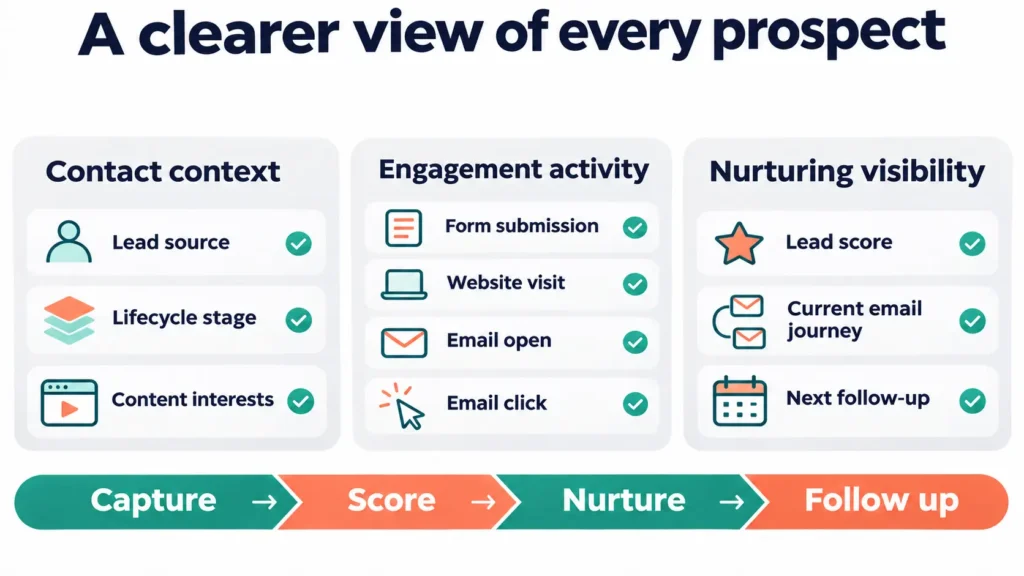
Centralized prospect information: Contacts, lifecycle stages and engagement were organized in HubSpot.
Structured engagement assessment: Lead scoring helped differentiate levels of prospect activity.
Regular communication: Automated journeys maintained contact, generally every three weeks.
More relevant messaging: Email communication reflected prospect interests and engagement.
Better sales context: The team had greater visibility into interactions before following up.
Key Success Factors
HubSpot CRM integration: Connected CRM with wider B2B marketing activities.
Lead scoring: Informed nurturing communication based on prospect engagement.
Consistent email cadence: Supported prospects throughout a longer buying journey.
Content and outreach: Helped educate prospects before sales conversations.
Conclusion
Xenia helped the client turn separate marketing activities into a connected process for capturing, assessing and nurturing B2B prospects. HubSpot provided the foundation, while lead scoring and regular communication supported ongoing engagement and informed sales follow-up.
Need help with HubSpot CRM optimization, lead scoring or automated nurturing? Talk to Xenia Consulting about HubSpot and B2B marketing support.
Categories
Recent Case Studies
Ready to maximize high-value leads for your b2b business?
Our targeted strategies connect you directly with your most important decision-makers.